
How to Delete Temporary Files on iPhone
Is your iPhone running out of storage or starting to feel slower than usual? Even though iOS 26 handles storage management much better than older iPhone versions, unnecessary temporary files still accumulate over time and can affect performance and available free space. We’ll cover the best ways to clear temporary files on iPhone, including how to clean browser cache, reduce app clutter, remove downloaded files, manage large attachments, and use iOS 26 storage tools to recover space safely.
What are Temporary Files?
Temporary files are short-term data that iOS, apps, and browsers create while your iPhone operates. Their main purpose is to speed up common tasks, reduce loading times, and store information that apps may need again later. Instead of downloading the same content repeatedly, your iPhone temporarily keeps certain files locally so apps and websites can open faster.
On modern iPhones, temporary files usually include:
- Browser cache and website data
- App cache from social media or streaming apps
- Downloaded thumbnails and previews
- Temporary files created during iOS or app updates
- Message attachments and media previews
- Offline content from apps like Spotify, Netflix, or YouTube
iPhones don’t give you a “temp files folder” like a computer does. iOS hides all of that behind the scenes, tucked away in app storage that you can’t browse directly. It does clean some of it up on its own, but often not enough.
7 Ways to Clear Temporary Files on iPhone
You don’t need to clear temporary files every week, but doing it occasionally is worth the few minutes it takes. iOS doesn’t offer a single “clear cache” button, so removing temporary files means working through a few different methods.
Method 1: Restart Your iPhone
A quick restart can do wonders. It clears the RAM and removes temporary system data that apps and iOS create during everyday use. While this method will not fully erase app cache or browser storage, it often helps resolve minor slowdowns, temporary glitches, frozen apps, and excessive background activity. It’s also one of the safest cleanup methods because it does not affect personal files or app settings.
Here’s how to do it:
- Hold down the Side button and either Volume button until the power sliders appear.
- Drag the “slide to power off” slider. Once you do this, your iPhone begins shutting down and background processes stop running. Temporary memory data stored in RAM gets cleared during this process.
- Wait about 30 seconds after the iPhone powers off completely.
- Hold down the Side button again until the Apple logo appears.
Once the iPhone restarts, iOS reloads system processes from scratch, which can help reduce temporary memory clutter and improve responsiveness. This method works especially well after long periods without a restart, app crashes, failed updates, or heavy multitasking sessions.
And that’s it. This is a simple but useful way to clear out some temporary clutter before moving on to deeper cleanup methods like browser cache removal and app storage management.
Method 2: Clear Browser Cache and Website Data
Web browsers store temporary files like cached images, cookies, website data, and browsing history to help pages load faster. Over time, this data can occupy a surprising amount of storage, especially after months of regular browsing, video streaming, shopping, or social media use.
Cache cleanup can free storage space, fix website loading problems, remove outdated website data, and improve browser responsiveness in some situations.
For Safari:
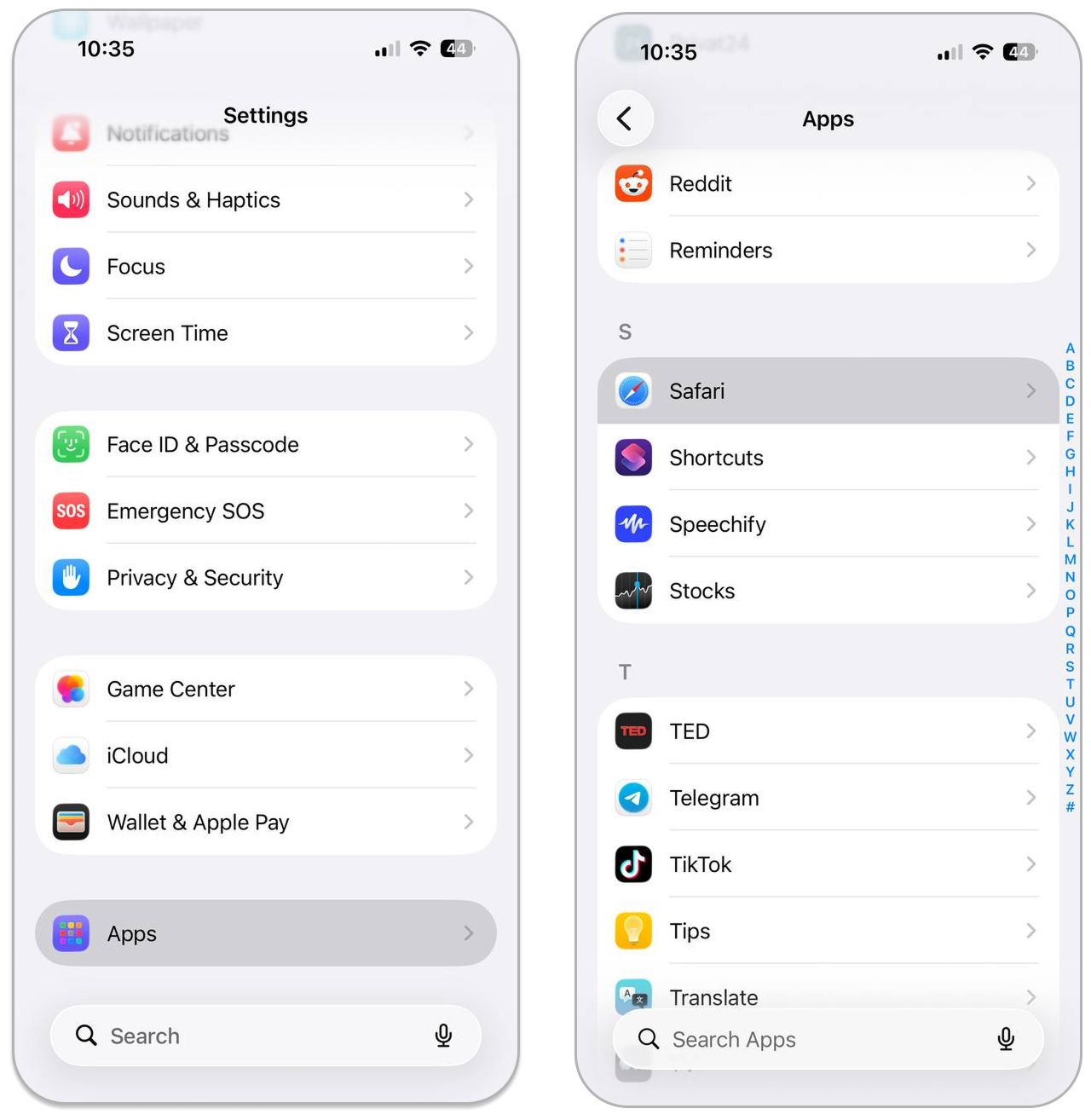
- Open Settings.
- Go to Apps.
- Scroll down and tap Safari.
- Tap Clear History and Website Data.
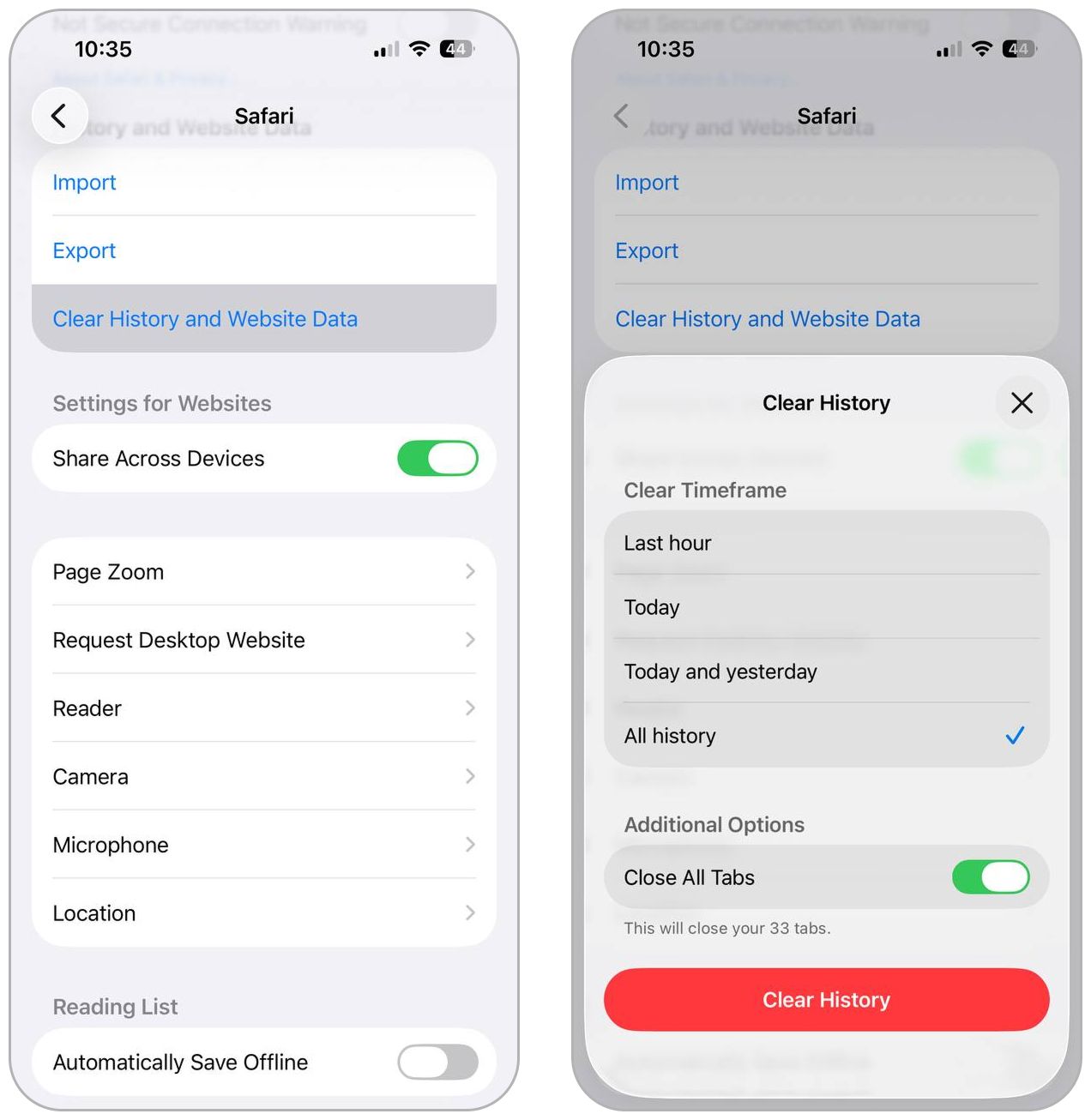
- Confirm the cleanup.
This removes browsing history, cookies, and cached website files from Safari across your synced Apple devices.
For Chrome:
- Open the Chrome app.
- Open the Chrome menu.
- Tap History.
- Select Delete Browsing Data.
- Choose cached images and files.
- Confirm removal.
You can follow similar steps in browsers like Firefox, Edge, or Brave.
Keep in mind that browser cache cleanup may sign you out of some websites and remove saved browsing sessions, but bookmarks, passwords stored in iCloud Keychain, and personal files usually stay untouched.
Method 3: Remove Temporary App Data
Apps on your iPhone can accumulate data over time, slowing things down. Some apps let you clear this clutter directly within their settings.
Here’s how:
- Find the app you want to clean up and open its settings. Many apps have built-in options to manage storage.
- Look for options like ‘Clear Cache‘ or ‘Manage Storage’. ‘Clear Cache’ will usually get rid of temporary data, while ‘Manage Storage’ might give you more detailed choices on what to keep and what to clear.
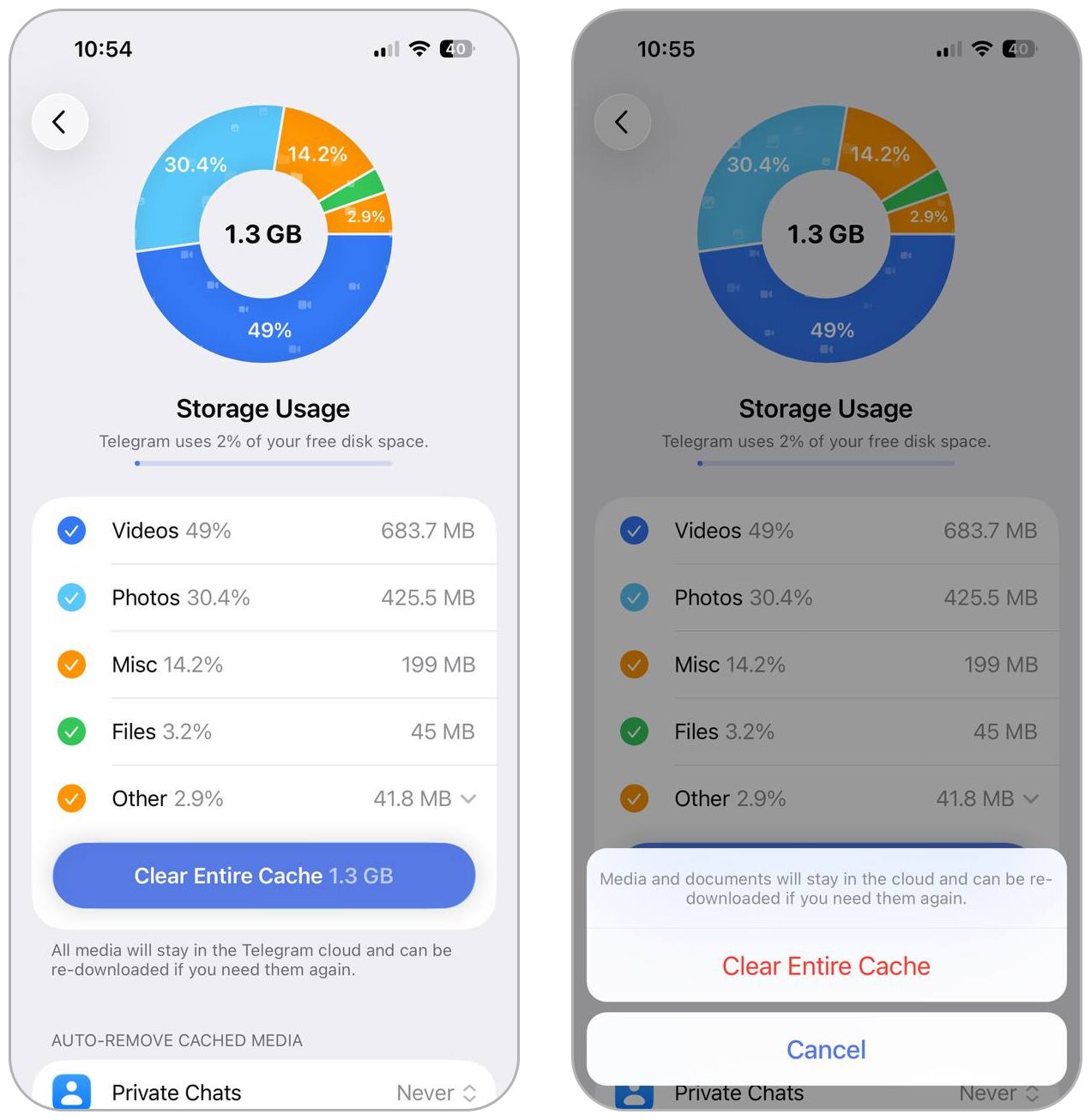
If you can’t find these options, don’t worry. Not all apps have them. But for those that do, it’s a simple way to delete temporary files on iPhone and keep your apps running smoothly.
Method 4: Offload Unused Apps
Offloading apps can help remove part of the temporary data and cache that apps accumulate over time without fully deleting your personal app data. Unlike full app removal, Offload App deletes the app itself while keeping documents, settings, and other user data on the device. When you reinstall the app later, your data returns automatically.
This method usually frees less storage than complete app deletion and reinstallation, because some cached files and documents remain on the iPhone, but it’s still a useful way to reduce app clutter safely.
Here’s how to offload apps on iPhone:
- Open Settings.
- Go to General.
- Tap iPhone Storage.
- Select the app you want to remove.
- Tap Offload App.
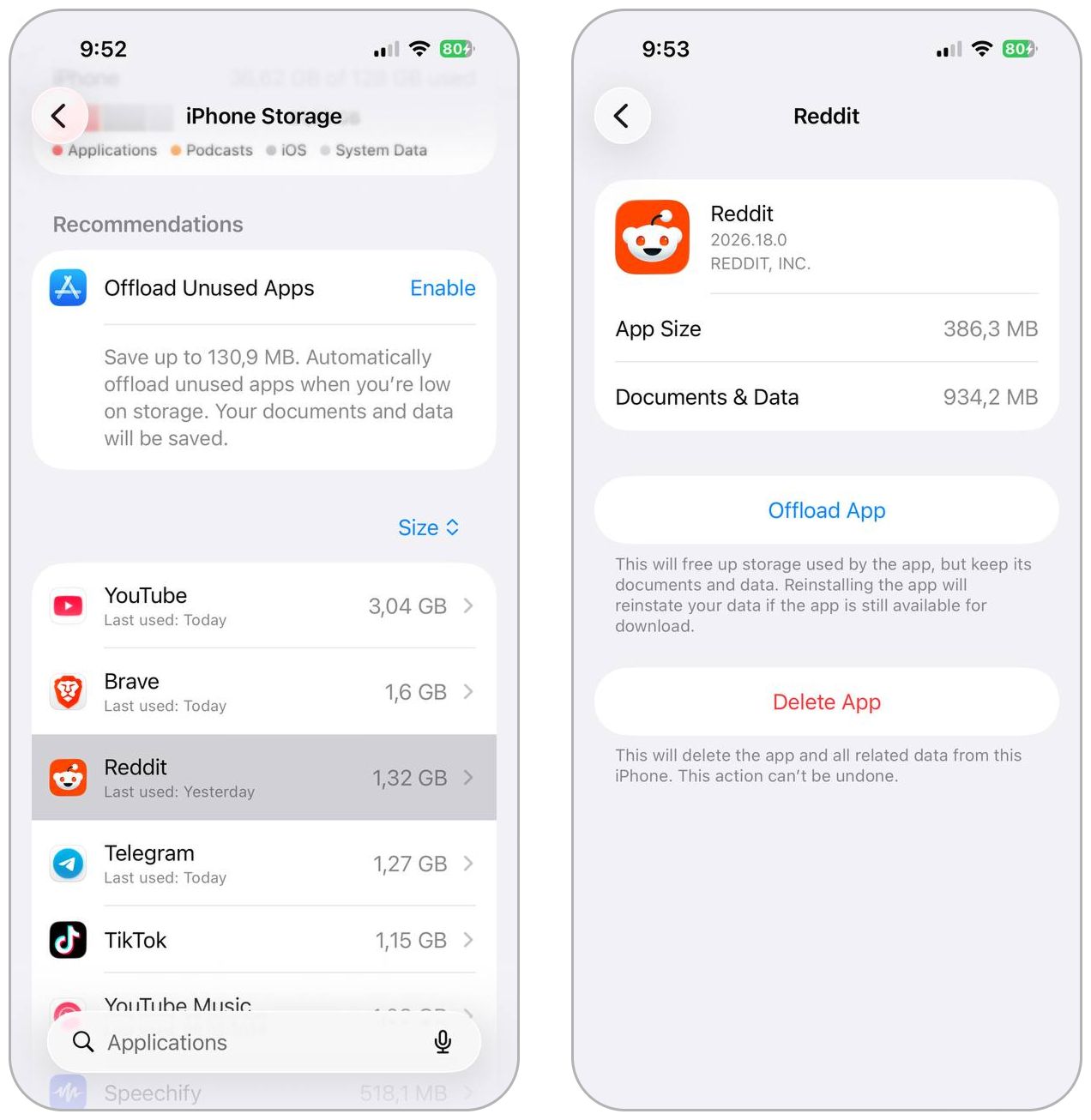
- Confirm the action.
Offloading usually frees less space than deletion, because some cached data and documents remain on the device. Still, it’s one of the safest ways to recover storage without losing important app data.
Method 5: Reinstall Apps With Large Cache
When an app doesn’t include a built in “Clear Cache” option, reinstalling it is often the easiest way to remove leftover temporary files and start fresh.
First, you can check how much storage the app uses:
- Open Settings.
- Go to General.
- Tap iPhone Storage.
- Find the app in the list and check its size.
If the app takes up much more space than expected, reinstalling may help.
Here’s how:
- Press and hold the app icon.
- Tap Remove App.
- Select Delete App.
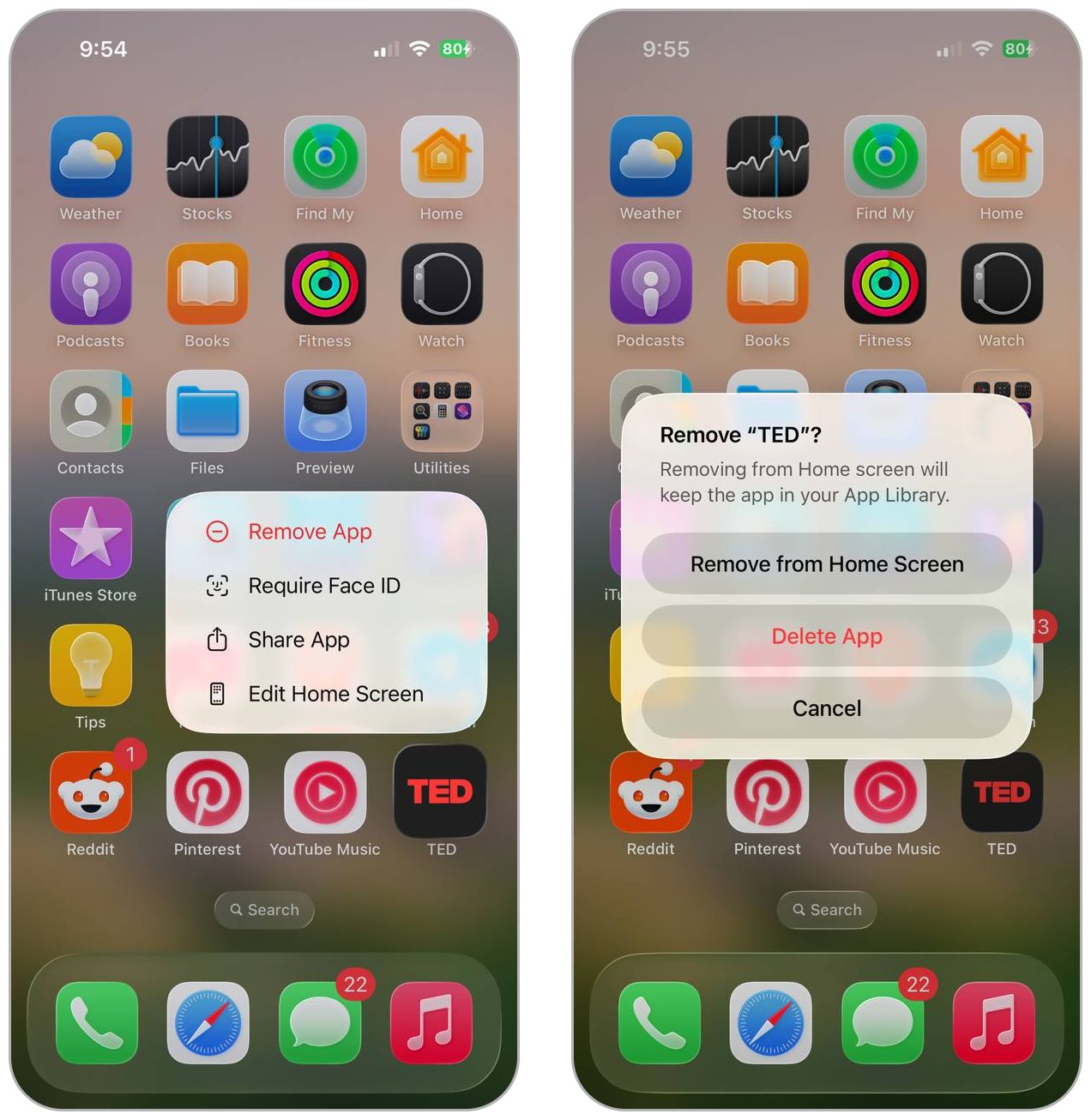
- Open the App Store and reinstall the app.
This removes cached files, temporary data, and other leftover app clutter that may have built up over time. Just keep in mind that deleting an app can also remove offline downloads, saved preferences, and other locally stored app data. Most apps restore your account after you sign back in, but it’s still a good idea to make sure important files or information are backed up before you remove anything.
Method 6: Remove Large Message Attachments
The Messages app can quietly consume a huge amount of storage over time. Photos, videos, GIFs, voice messages, and other attachments from conversations often remain stored locally on the iPhone long after you stop using them. Group chats and media-heavy conversations usually occupy the most space.
One of the easiest methods to delete large attachments on an iPhone is directly through the Messages app. Apple allows you to review and remove stored attachments from individual conversations without deleting the entire chat.
Here’s how:
- Open the Messages app.
- Open a conversation.
- Tap the contact or group icon at the top.
- Select a category like Photos or Videos.
- Tap Select.
- Choose the attachments you want to remove.
- Tap the Delete button and confirm removal.
You can also remove entire conversations if you no longer need them:
- Open the Messages app.
- Swipe left on a conversation.
- Tap the Delete button.
Deleted messages and attachments stay inside the Recently Deleted section for 30 days unless you remove them permanently.
Method 7: Remove Offline Downloads From Streaming Apps
Apps like Spotify, Netflix, YouTube, Disney+, and Podcasts often store offline content directly on the iPhone. Downloaded playlists, movies, TV episodes, and podcasts can occupy tens of gigabytes without obvious warnings.
Most streaming apps include built in download management tools inside their settings.
In most cases, you can:
- Open the streaming app.
- Go sections like Downloads, Storage, or Offline Content.
- Review downloaded media.
- Remove content you no longer watch or listen to.
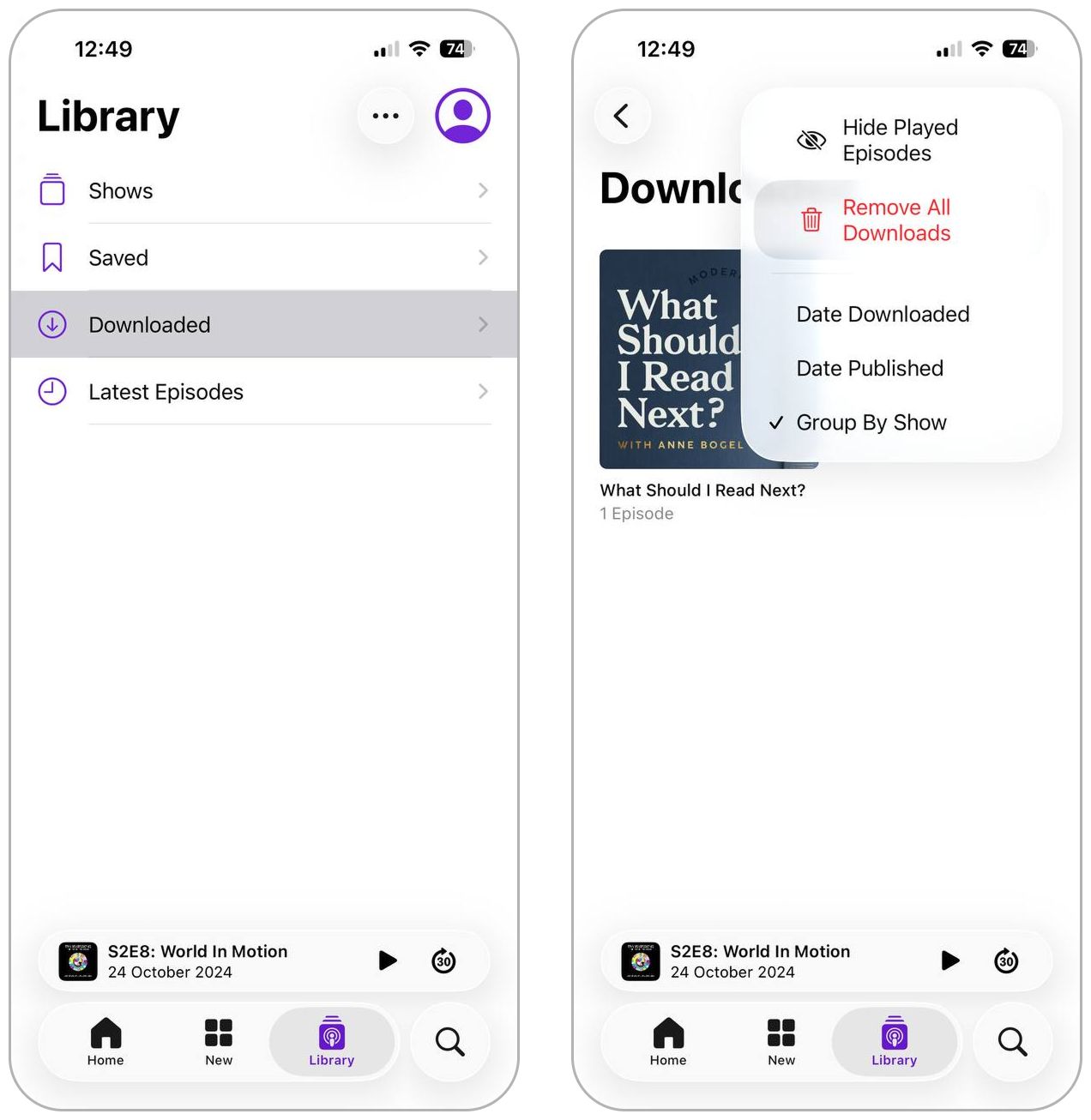
This is one of the fastest ways to recover large amounts of storage, especially on devices with limited capacity or heavy streaming use.
Additional Methods to Free Up Your Storage
If you still don’t have enough free space after the cleanup methods above, a few additional storage cleanup methods can help recover much more space. On most iPhones, photos, videos, downloads, and message attachments usually occupy far more storage than temporary cache files alone.
Some of the most useful additional methods include:
- Remove duplicate and similar photos. Photo libraries often contain screenshots, blurry shots, burst photos, and duplicates that occupy several gigabytes over time.
- Clear the Recently Deleted album. Deleted photos and videos still occupy storage for 30 days until permanent removal.
- Enable Optimize iPhone Storage. iCloud Photos can keep smaller versions of photos on the device while full-resolution copies stay in iCloud.
- Review large message attachments. Videos, GIFs, and photos inside Messages can quietly consume a huge amount of storage over time.
Clearing out temp files from your iPhone doesn’t have to be manual or tedious. The App Store has some reliable apps designed for this exact purpose.
Among third-party apps, we recommend Clever Cleaner because it offers one of the simplest and most useful cleanup experiences currently available on iPhone. Many cleaner apps on the App Store rely heavily on subscriptions, ads, or exaggerated claims about “system cleanup,” while Clever Cleaner focuses on the types of files that actually occupy most iPhone storage: duplicate photos, similar images, screenshots, Live Photos, and large videos.

The app offers a useful free version and works particularly well for photo library cleanup, which continues to be one of the largest sources of storage usage on modern iPhones. Even though iOS already detects exact duplicates, it still struggles with visually similar photos, such as burst shots, multiple attempts at the same picture, or slightly different angles of the same scene. This is one of the areas where third party cleaners still noticeably outperform the native Photos app.
Here is how to use it:
- Download Clever Cleaner from the App Store.
- Open the app, allow access to your photo library, and you’ll immediately see the Similars section. Clever Cleaner scans for exact duplicates and visually similar photos, including burst shots, repeated attempts, and pictures taken from slightly different angles.
- Tap Smart Cleanup if you want the app to handle the selection automatically. Clever Cleaner will scan your library, group similar photos, and pre-select the ones it suggests to remove.
- Review the suggested photos before deletion.
- Confirm removal once you’re happy with the selection. You can also use swipe controls to review photos faster.
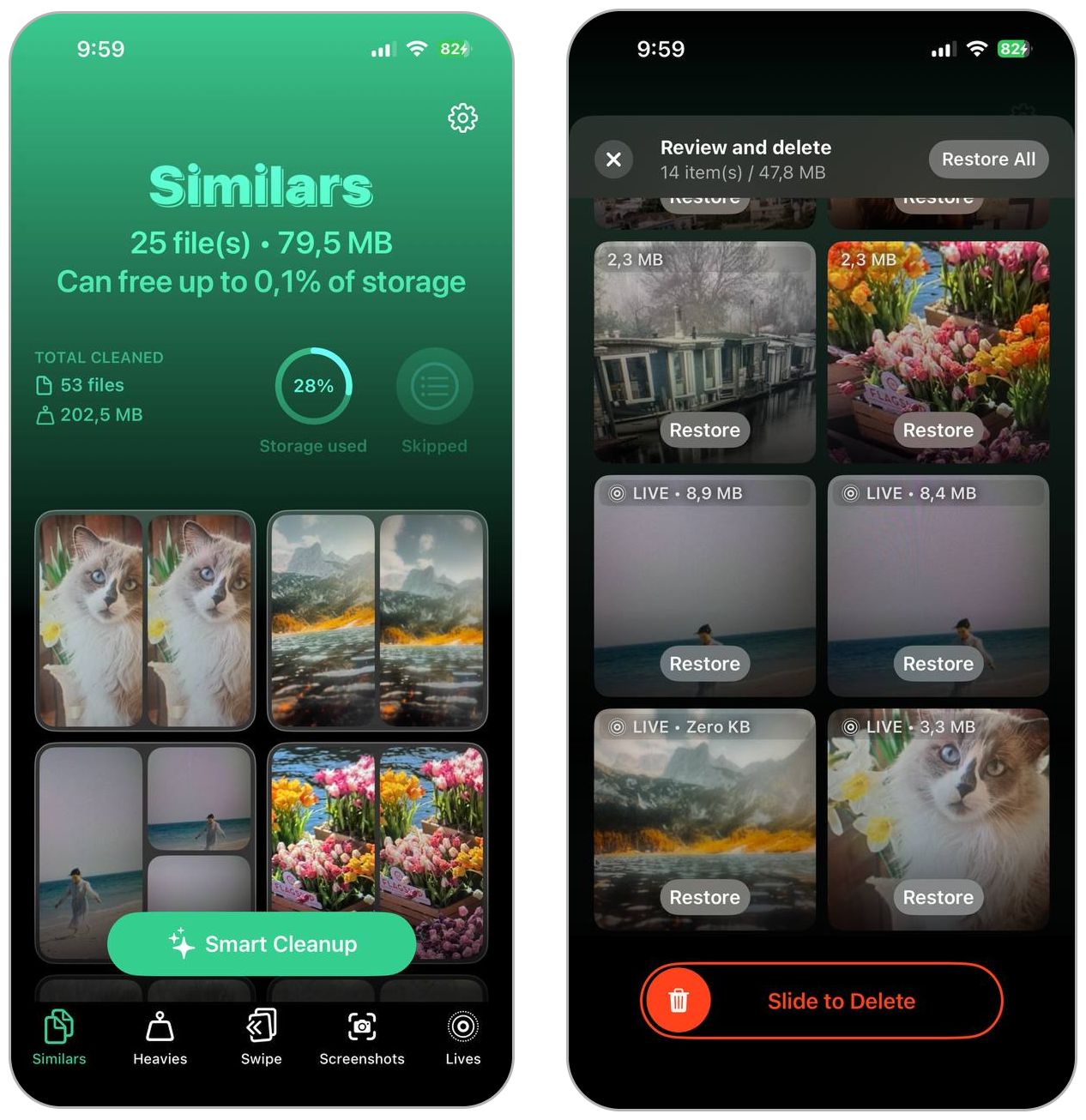
- Open the Recently Deleted album in the Photos app and delete the removed files permanently. Photos and videos stay there for up to 30 days and still take up storage until you clear them.
If you want to free even more storage, Clever Cleaner also includes several additional tools:
- Heavies helps locate large videos and oversized files that quietly occupy several gigabytes over time. The app also supports video compression, which reduces file size without a major quality drop.
- Screenshots groups old screenshots together so you can quickly remove unnecessary captures instead of scrolling manually through the Photos app.
- Lives helps reduce storage usage by converting Live Photos into still images, which removes the short video portion attached to every Live Photo.
- Swipe Mode lets you review your library quickly one photo at a time with simple swipe controls, which makes large manual cleanup sessions much faster.
This type of cleanup usually frees much more storage than temporary file removal alone, especially on iPhones with large photo and video libraries.
Key Takeaways
Temporary files are only one part of iPhone storage clutter, but regular cleanup can still help recover space, reduce minor slowdowns, and prevent storage related issues before they become more serious.
- iPhones still accumulate temporary files in 2026, even though iOS now manages storage much better automatically.
- Browser cache, app cache, downloads, message attachments, and photo libraries usually occupy the most extra storage.
- A simple restart can clear temporary memory data and help resolve small performance issues.
- Browser cache cleanup can free storage and fix website loading problems, but it may sign you out of websites.
- Offloading unused apps frees space without fully deleting personal app data.
- Reinstalling apps with unusually large cache often removes more temporary data than standard cleanup alone.
- Photos and videos usually consume far more storage than temporary system files.
- Third party cleaner apps like Clever Cleaner cannot deeply clean iOS system cache because of Apple’s restrictions, but they still help organize photos, videos, screenshots, and large files.
A quick storage check every few weeks, along with occasional browser, app, and photo cleanup, usually prevents most iPhone storage problems long before you start seeing low storage warnings or failed updates.
FAQ
Personal files like photos, contacts, messages, and documents usually stay untouched unless you remove them manually. Still, it’s smart to double check that important data has a backup before app deletion or large storage cleanup, especially for apps that store files locally.